

3D Gaussian Splatting
Real objects and spaces become photorealistic real-time scenes you can orbit and walk through freely — no modelling, straight in the browser.
Overview
Capture instead of rebuild.
3D Gaussian Splatting reconstructs a scene from a series of ordinary photographs or video frames. Instead of polygons and textures you get a cloud of millions of small, coloured Gaussians that reproduce light, reflections and fine structure exactly as the camera saw them.
The result can be viewed in real time from any angle — and it looks like a photograph because it is made of photographs. For plants that have grown over decades, one-off builds and existing installations, this is often the only economical route to a photorealistic 3D representation.
In practice
What a splat scene delivers in the browser.
Technical figures from a typical delivery.
Technology
From the camera to the browser.
Three stages, all of them handled in house.
CAPTURE
On-site acquisition
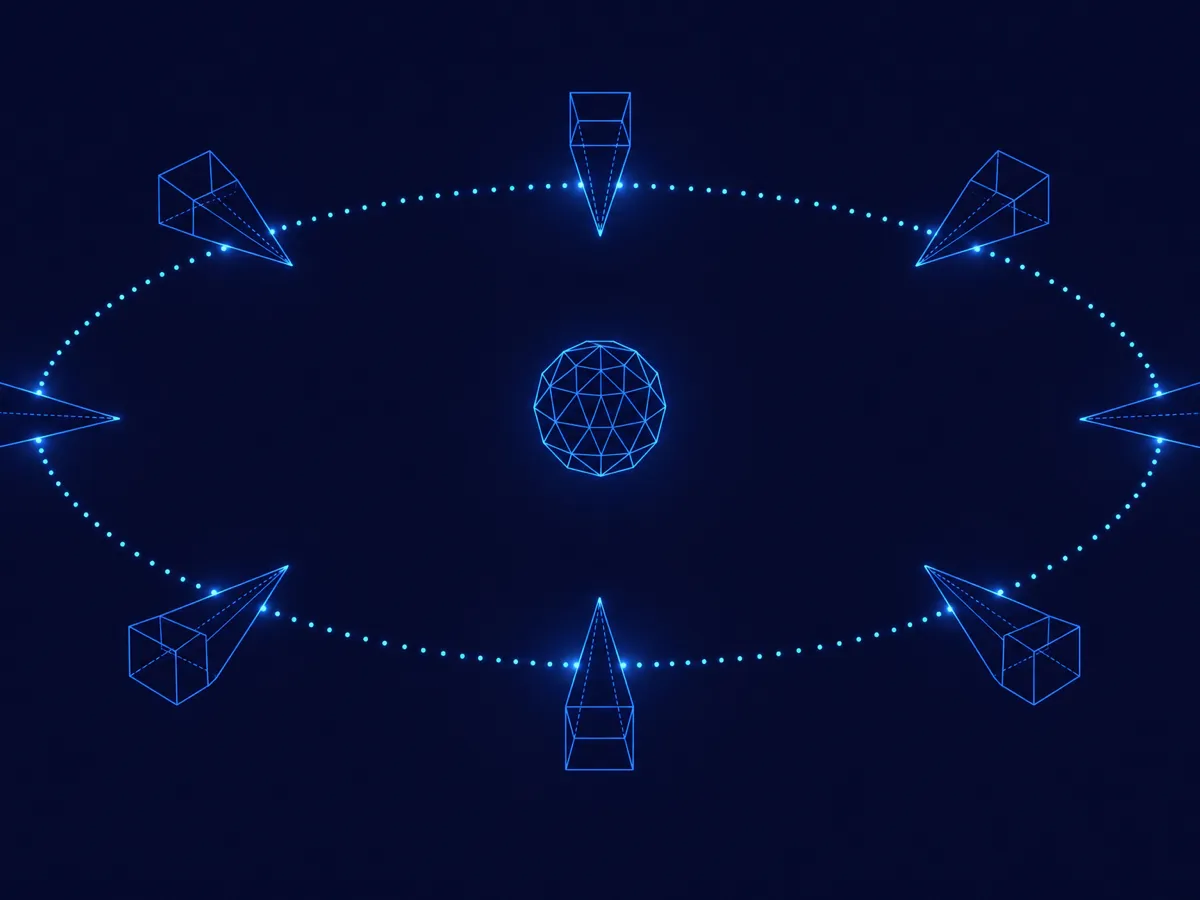
We plan the camera paths so that every relevant surface is covered from several angles. Depending on the object we use DSLR, video or drone footage — even lighting and gapless coverage are what matter.
RECONSTRUCTION
Training the splat scene
We derive the camera positions from the footage and train the Gaussian splat representation from it. The scene is then cleaned up: moving objects, artefacts and irrelevant surroundings are removed.

DELIVERY
Real-time rendering on the web
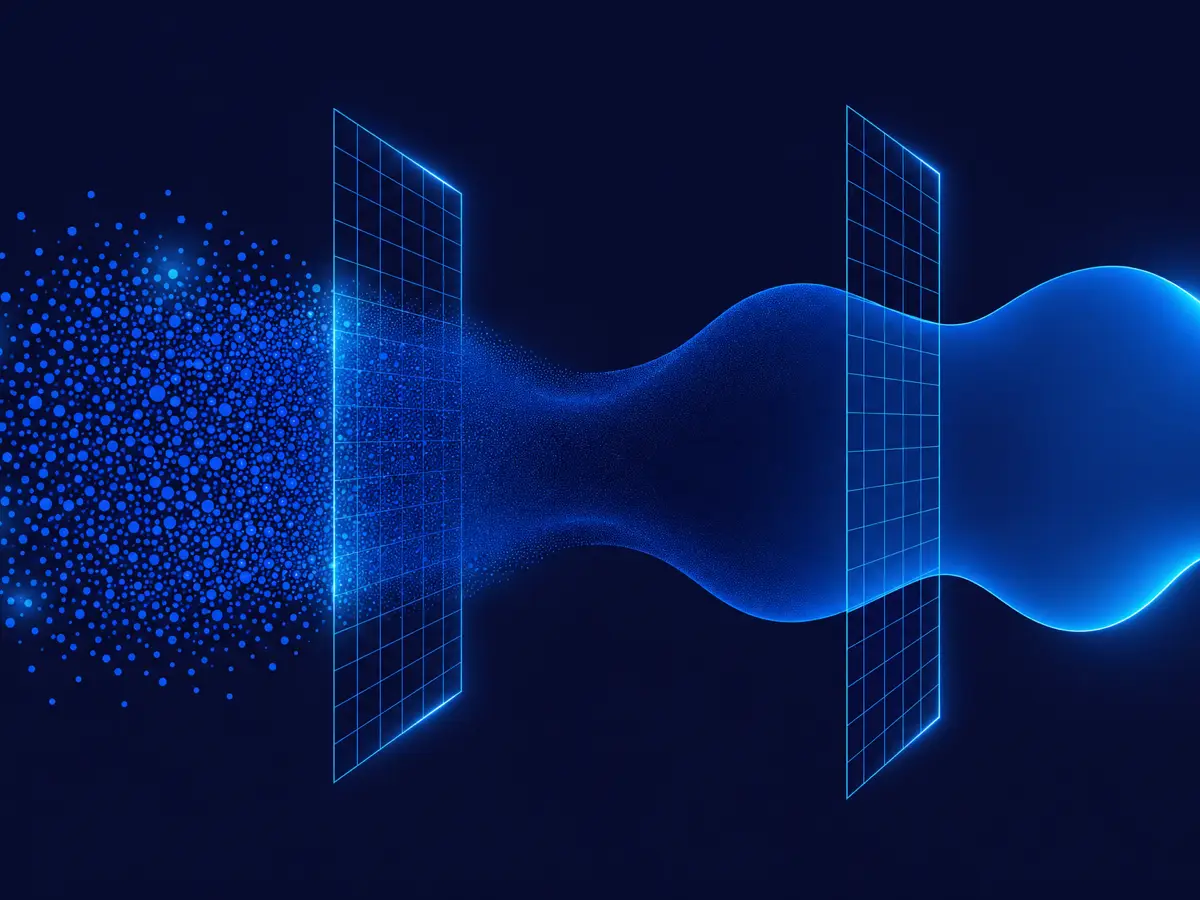
The scene is compressed, split into levels of detail and served through a WebGL or WebGPU renderer. It starts in seconds and runs on desktop, tablet and smartphone.
Where it fits
When splatting is the better choice.
Compared with classic 3D modelling, the effort shifts from rebuilding to capturing.
Classic 3D modelling
- Every component has to be modelled, textured and lit.
- Grown plants and existing installations are barely economical to reproduce.
- Photorealism only arrives after extensive look development.
- Every change to the real object means modelling work all over again.
3D Gaussian Splatting
- A single capture session replaces weeks of modelling.
- Even winding environments grown over years can be captured.
- Light, reflections and materials come straight out of the footage.
- A repeat scan brings the scene up to date within days.
Use cases
Where splatting is already in production.
Wherever the real object is more convincing than any model of it.
Plants and production halls
Existing production environments as a walkable scene — for sales, planning and remote acceptance.
Special machines and one-offs
Single builds that never justify a 3D model are captured in one session and stay presentable.
Reference objects
Completed projects remain available in photorealistic form, even once the site is long out of reach.
Got an object for us to capture?
Show us the object — we will give you a realistic estimate of capture effort and result.
Discuss a project